
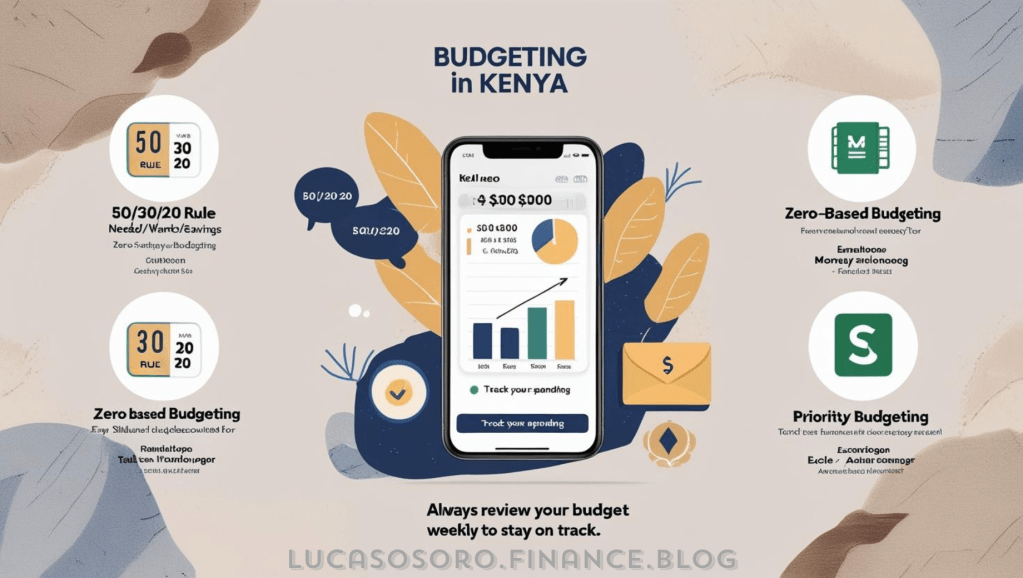
Budgeting in Kenya: Techniques and Expense Tracking Tools That Actually Work.
By Lucas Osoro
Budgeting in Kenya: Techniques and Expense Tracking Tools That Actually Work
Do you ever reach the end of the month wondering where all your money went? You’re not alone. Many Kenyans struggle with managing income, especially with rising costs and unstable earnings. The solution? Budgeting and expense tracking — practical tools that can transform your financial life.
Real-Life Scenario: Meet James from Nairobi
James is a boda boda rider in Nairobi making an average of KES 1,000 daily. At the end of every month, he finds himself broke, despite working 7 days a week. After attending a local financial literacy class, James started using a simple budgeting method and began tracking his expenses using his M-Pesa statement. In 3 months, he saved KES 8,500 and reduced his airtime and impulse expenses by 40%. Budgeting changed his life — and it can change yours too.
1. Proven Budgeting Techniques That Work in Kenya
a) The 50/30/20 Rule (Kenyan Edition)
This global budgeting method works great with steady income:
- 50% for needs like rent, food, utilities
- 30% for wants like entertainment or clothes
- 20% for savings and debt repayment
Tip: Adapt it to your income level — try 60/30/10 if needed.
b) Envelope Budgeting Using M-Pesa
Instead of physical envelopes, use digital ones:
- Use Pochi la Biashara to separate business and personal funds
- Create savings goals in M-Shwari
- Withdraw weekly to stay disciplined
c) Zero-Based Budgeting for Hustlers and Freelancers
Perfect for irregular incomes:
- Estimate monthly income
- Assign every shilling to a purpose — no leftovers
- Update weekly as money comes in
2. Best Expense Tracking Tools in Kenya
a) M-Pesa and Airtel Money Statements
Access your monthly transaction records to track:
- Food and utility payments
- Airtime and data spending
- Recurring costs like subscriptions or betting
Export them into Excel or Google Sheets for analysis.
b) Google Sheets or Excel Budget Templates
Use or customize a free Kenyan budget template:
- Track daily, weekly, and monthly expenses
- Create pie charts and trend reports
- Filter categories like rent, transport, or savings
c) Chumz App
Chumz is a Kenyan savings app that helps you build habits:
- Automated saving based on goals
- Triggered saving when you spend less
- Compatible with mobile money
d) Pesapal
Useful for business owners and online sellers:
- Tracks income and expenses in real time
- Integrated with M-Pesa, Visa, PayPal
- Great for tax planning and monthly reports
e) Manual Notebook Tracking
Prefer the traditional method?
- Write down every purchase in a notebook
- Set aside a review day every Sunday
- Helps you become more conscious of spending
3. How to Start Budgeting Today
- Record your monthly income and expenses
Use past M-Pesa transactions or salary slips - Choose a budgeting method
Start with the 50/30/20 rule or zero-based model - Pick one tool to track expenses consistently
Try Sheets, an app, or a notebook — whichever suits you
Final Thoughts
Effective budgeting in Kenya isn’t about having more — it’s about using what you have better. Whether you’re a student, employed, or running a side hustle, the right budgeting technique and expense tracking tool can give you clarity, control, and confidence over your finances.
Start tracking your expenses today — your future self will thank you.
Disclaimer: This blog post is for informational purposes only. It does not constitute financial, legal, or investment advice. Readers are encouraged to consult qualified professionals before making financial decisions.


Leave a comment