
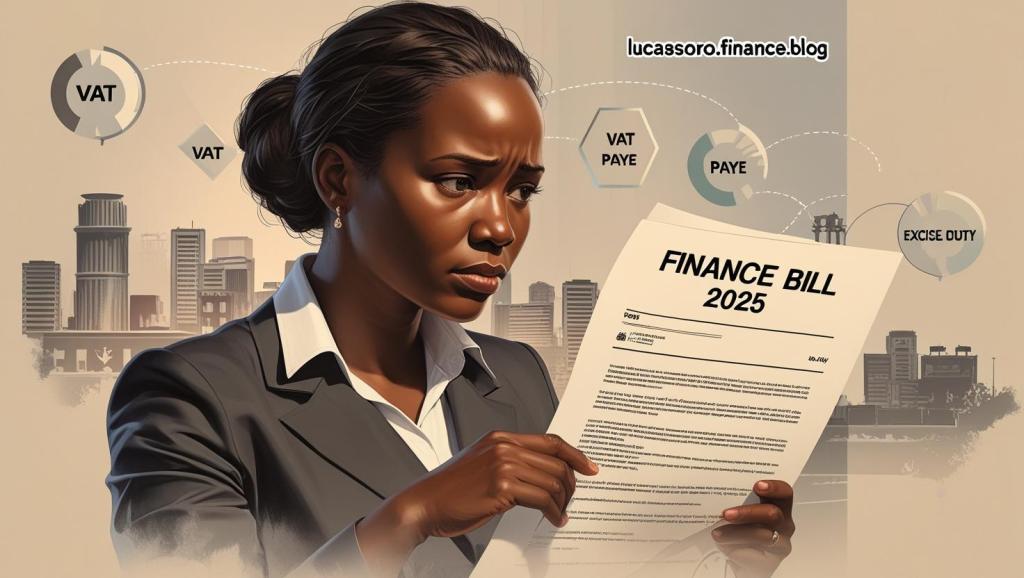
Finance Bill 2025: Key Tax Changes and Their Impact on Personal Finances
By Lucas Osoro
Finance Bill 2025: Key Tax Changes and Their Impact on Personal Finances
Introduction
The Finance Bill 2025 introduces several tax amendments aimed at broadening the tax base and enhancing revenue collection. These changes have significant implications for individual taxpayers in Kenya. This article explores the key provisions of the bill and how they may affect your personal finances.
Key Provisions and Their Implications
1. Limitation on Carrying Forward Tax Losses
The bill proposes limiting the period for carrying forward tax losses to five years, a change from the current provision that allows indefinite carryforward. This may impact individuals with business income, as it restricts the duration over which they can offset losses against future profits.
2. Changes in VAT on Clean Energy Inputs
Inputs for solar, wind, and geothermal energy, previously zero-rated, are proposed to be standard-rated. This change could increase the cost of adopting clean energy solutions for households.
3. Removal of Preferential Tax Rates
The bill suggests removing the reduced corporate income tax rate of 15% for companies engaged in local assembly of motor vehicles and construction of at least 100 residential units annually. This could affect employment and housing affordability, indirectly impacting personal finances.
4. Digital Asset Tax Reduction
The digital asset tax rate is proposed to be reduced from 3% to 1.5%. This change may encourage investment in digital assets, affecting personal investment strategies.
Conclusion
The Finance Bill 2025 introduces significant changes that could impact various aspects of personal finance, including taxation, investment, and cost of living. Individuals are advised to consult financial advisors to understand these changes and adjust their financial planning accordingly.
Note: This article is based on the proposed Finance Bill 2025 and is subject to change upon enactment.


Leave a comment